How to test generated HOCl for FAC and pH: a manual-guided checklist for the Eco One, Hypo 7.5 and EWCO 300, plus what the test results mean.
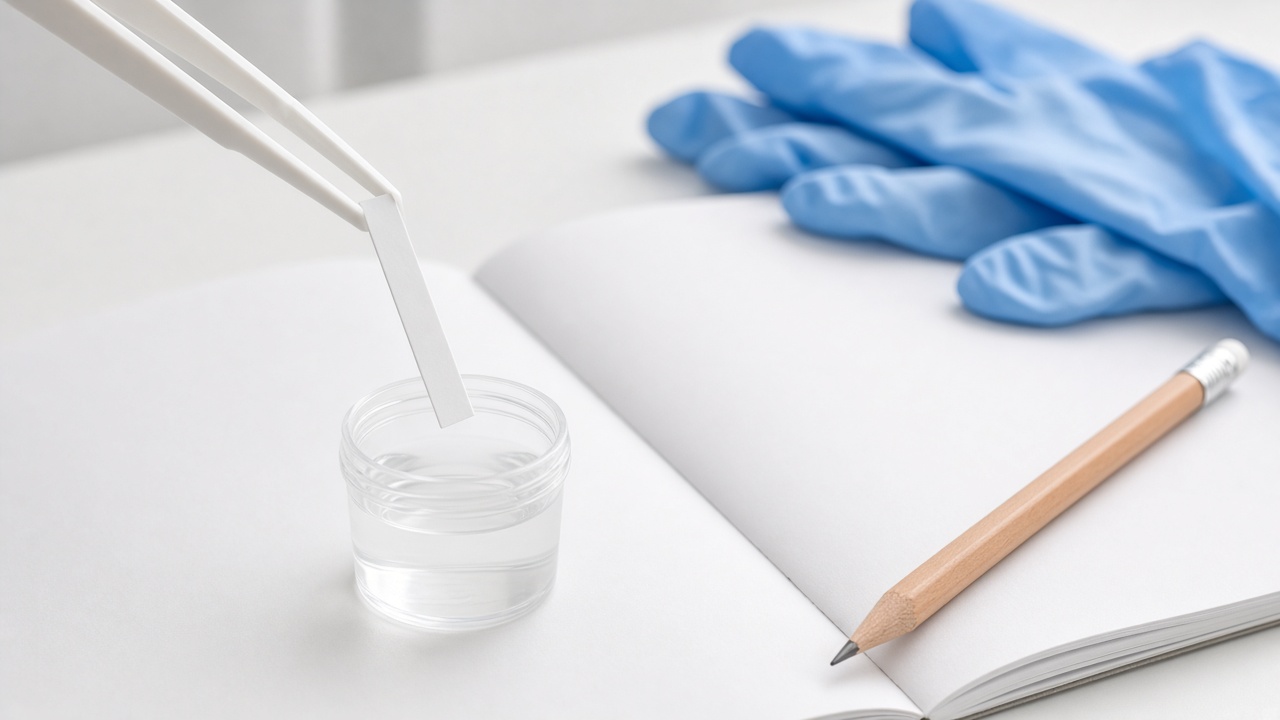
What you're testing, and why
Test two things on every batch (or regularly, for continuous systems):
- Free available chlorine (FAC), in ppm: how much chlorine is present.
- pH: which form the chlorine is mostly in.
Readings are approximate. They tell you whether a batch matches what the manual says it should make. They don't, on their own, show that a cleaning use's directions have been met; that depends on following the product's directions for concentration, precleaning, and contact time.
General checklist (all models)
- ☐ Use the test strips supplied with your unit or the type your manual describes, and follow the strip maker's directions for reading time and color matching.
- ☐ Test after the cycle finishes (batch) or once production is running steadily (continuous).
- ☐ Read FAC against the strip's color chart, in good light.
- ☐ Read pH with a pH strip.
- ☐ Compare both to your manual's expected values, including the pH 5–6 range where your manual specifies it.
- ☐ Record the date, setting, and readings if you're tracking batches.
- ☐ If a stored batch is used later, test again before use. See Does HOCl Expire? Eco One Storage, Containers and Testing.
Eco One
From the Eco One manual and product page:
- ☐ Strip range: chlorine test paper with color matches at 10, 50, 100, and 200 ppm (measures 10–200 ppm).
- ☐ Expected FAC (1-liter fill, food-grade salt batch, approximate): Setting 1 ≈ 40 ppm; Setting 2 ≈ 60 ppm; Setting 3 ≈ 100 ppm; Setting 3 run twice ≈ 200 ppm. The manual notes ppm values are approximations because water quality varies. The Eco One makes up to 500 ppm.
- ☐ pH: expect pH 5–6 when the batch is made with the manual's vinegar step (1 tsp of 5% distilled vinegar for 200 ppm; 2 tsp added to the pitcher before the 40-minute, 5-cycle 500 ppm run).
- ☐ Above the strip range: for a 500 ppm batch, the manual says to mix 1 part solution with 4 parts water (a 1:5 dilution), test the diluted sample, and multiply the reading by 5. Example: a 100 ppm reading = 500 ppm.
- ☐ Included supplies: HOCl and pH test paper.
Hypo 7.5
From the Hypo 7.5 manual:
- ☐ Test prior to use with high-chlorine test strips; use the supplied chlorine strips to verify strength.
- ☐ Expected FAC: 200 or 500 ppm, matching the cycle selected and the food-grade salt and vinegar scoops the manual specifies for that cycle. The Hypo 7.5 makes a 7.5 L (2 gal.) batch.
- ☐ pH: verify it's between 5 and 6.
- ☐ If results are off, use the manual's fault table. For example, the manual says that without vinegar the pH will be about 9.0–9.4. If the pH is above 6.0 or below 5.0, don't adjust a finished batch: empty the container, rinse it, and make a new batch with the salt and vinegar scoops the manual lists for your chosen strength. If food-grade salt was left out, FAC will be very low; add food-grade salt per the manual and rerun the cycle.
- ☐ Included supplies: chlorine and pH test strips.
EWCO 300
From the EWCO 300 manual and product page:
- ☐ Spot-check FAC with test strips or a photometer against the manual's concentration charts. The EWCO 300 makes up to 300 ppm.
- ☐ Know your conditions: the charts depend on additive formula, flow rate, and amperage (shown at 17.5 A and 22 A). Note all three when you test.
- ☐ Expect variation: the manual says actual performance varies with additive formulation, pump speed, and water quality.
- ☐ If FAC is too low or too high: the manual says higher flow lowers FAC and higher amperage raises it; pump speed changes additive dosing (mid-range for most purposes). Adjust only within the manual's ranges, and let a trained operator make changes.
- ☐ Alarms: Err 2 (low current) usually means low or depleted additive.
- ☐ pH: expected pH depends on the additive formula, roughly 7–8, 6–7, or 5–6 per the manual.
- ☐ Supplies: the product page lists chlorine and pH test paper, with an optional digital photometer and pH meter.
Refill HOCl test paper and pH test paper are sold separately if you need them.
What results mean
| Result | What it suggests | What to do |
|---|---|---|
| FAC and pH match the manual | Batch made as expected | Use per directions |
| FAC low | Ingredient, setting, or water issue; or stored solution has weakened | Check the manual's troubleshooting; make a fresh batch |
| pH outside the manual's range | Ingredient amounts off | Follow the manual's correction steps only |
| Strip can't read that high | Beyond the strip's range | Use a test method your manual or strip maker specifies |
For what each reading means, see FAC, ppm, pH and ORP: What Generated HOCl Measurements Mean.
What not to do
- Don't add acids or other ingredients beyond what your manual specifies.
- Never mix HOCl solution with ammonia, bleach, strong acids or other cleaners; doing so can release toxic chlorine gas. Add only the ingredients and amounts your manual specifies. If someone breathes in fumes or swallows solution, call Poison Help at 1-800-222-1222 (poisonhelp.hrsa.gov).
- Don't use smell, pH, or ORP alone as a strength check.
- Don't drink generator output or apply it to the body.
Related
- FAC, ppm, pH and ORP: What Generated HOCl Measurements Mean
- Does HOCl Expire? Eco One Storage, Containers and Testing
- Eco One · Hypo 7.5 · EWCO 300
Questions about your unit? Email service@hocl.com.